

INDEPENDENT CARE · MANCHESTER

Your local pharmacy. Here for Manchester.

Personal advice. Everyday prescriptions. Care that fits your life. From your first question to your next appointment, our team is here for you — right in the heart of Manchester.

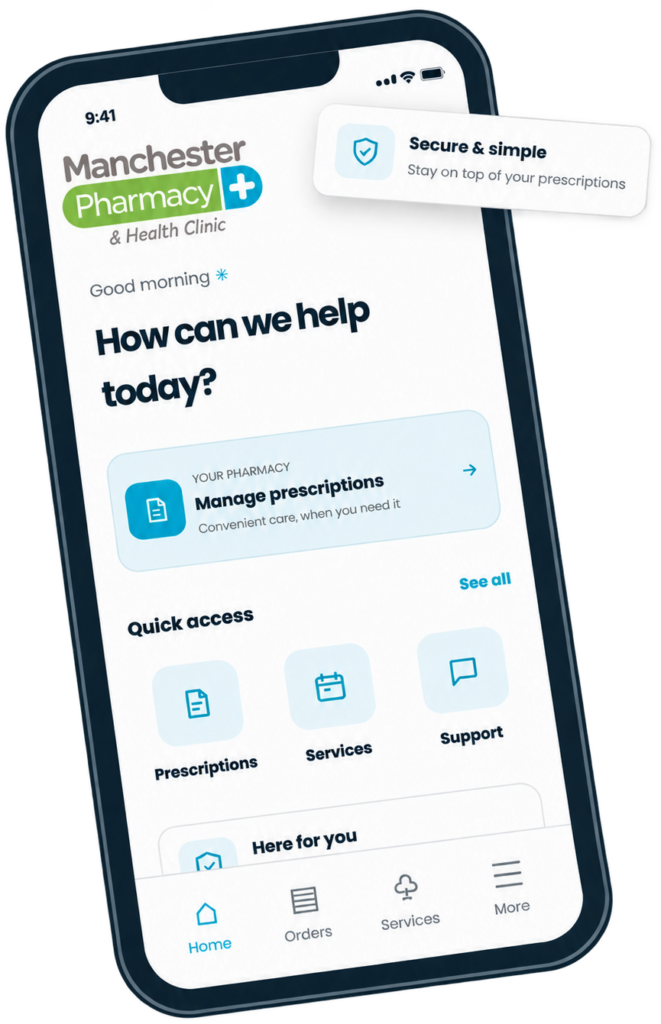
THE MANCHESTER PHARMACY APP

Your pharmacy. In your pocket.

Manage prescriptions for you and your loved ones, follow their progress and stay connected with our team — in one easy-to-use app.

Free to download · Available for iOS and Android

A LITTLE ABOUT US

Independent care. Genuinely local.

Manchester Pharmacy & Health Clinic is an independent pharmacy in central Manchester, helping people with NHS prescriptions, private services and everyday healthcare advice.
Our pharmacists and clinicians are here to make care more approachable, with the expertise and attention you deserve.

Experienced professionals

Support from qualified pharmacy clinicians.

Care you can rely on

Clinical support tailored to your needs.

WHAT WE CAN HELP WITH

Let's find the care you need.

Ready to book a clinic appointment or have a question? We're here to help.

PATIENT REVIEWS

Trusted by our community.

Hear from the people we care for every day across Manchester.

4.1 ★

Based on 157+ patient reviews

HEALTH ADVICE & NEWS

Latest from our pharmacy blog.

Practical tips, seasonal guidance and updates from our pharmacists, written to help you look after your health.

Understanding NHS Repeat Prescription Process

If you take regular medicine, an NHS repeat prescription lets you request approved items without booking a GP appointment each time. You can ask for the medicine, wait for GP approval, and then collect it from your nominated pharmacy or use delivery where your pharmacy offers it. Costs may also be easier to manage if you understand exemptions and the prescription prepayment certificate options in England.

How does an NHS repeat prescription work?

An NHS repeat prescription is used when a clinician has agreed that you can keep taking a medicine for an ongoing condition. You can then order it again when you are running low. The NHS advises requesting your prescription up to 5 working days before you need the medicine, because your GP surgery must approve the request before the pharmacy can prepare it. (nhs.uk)

Not every medicine can be reordered automatically. Some items may need a review, may be too early to request, or may be controlled medicines that cannot be requested through the NHS App. If something is missing from your repeat prescription online list, contact your GP surgery rather than assuming it has been stopped. (nhs.uk)

The usual ordering routes

Most people can order repeat prescription items in more than one way, although each GP practice may have its own preferred system. NHS repeat prescription ordering is often easiest online, because you can choose the medicines you need, check past requests, and manage your chosen pharmacy without waiting on the phone.

Common routes include:

  • NHS App or NHS website: You can order prescription online by signing in, selecting the Prescriptions tab, and choosing Request a repeat prescription. Your prescription request then goes to your GP surgery for approval. (nhs.uk)
  • Other GP online services: Some surgeries use approved online systems alongside the NHS App. Ask your practice which service they use.
  • Pharmacy arrangements: If your GP has set up repeat dispensing, you may be able to ask your pharmacy directly for the next issue instead of sending a new request each time. (nhs.uk)
  • Contacting your GP surgery: If online access is not suitable, ask the surgery how they accept repeat prescription requests.

For many patients, repeat prescription online works best when the nominated pharmacy is kept up to date. You can choose a high-street pharmacy to collect from, and some pharmacies may offer delivery, but availability depends on the pharmacy. (nhs.uk)

A man and a woman looking at items in a store

A practical checklist before you order

Before you order repeat prescription items, take a minute to check the details. This helps avoid delays, rejected requests, duplicate medicines, or unnecessary extra charges.

  • Check how many days’ supply you have left, and request in good time.
  • Order only the medicines you currently need.
  • Read any notes in the NHS App or GP online service, especially if a review is due.
  • Confirm your nominated pharmacy is correct.
  • If you are going away, ask your GP surgery what they can issue in advance rather than assuming an NHS 3 month prescription will be available.
  • If you pay for prescriptions, consider whether a pre paid prescription option could reduce your costs.
  • If you need medicine urgently, contact your GP surgery; outside normal hours, NHS guidance points patients to NHS 111 online or by phone. (nhs.uk)

This small routine can make the difference between a smooth monthly prescription and a stressful last-minute chase.

Can a prescription prepayment certificate save money?

A prescription prepayment certificate, often called a PPC, can save money if you pay for NHS prescription items in England and need several items over a short period. A standard PPC covers all your NHS prescriptions during the certificate period, no matter how many you need. (gov.uk)

Current NHS prescription prepayment options include a 3-month PPC and a 12-month PPC. GOV.UK lists the standard prescription charge in England as £9.90 per item, with PPC costs of £32.05 for 3 months and £114.50 for 12 months. It says a PPC may be cheaper if you will buy 4 or more prescription items in 3 months, or 12 or more in 12 months. (gov.uk)

You may also hear different names for the same idea, such as pre paid prescription, prepaid prescription certificate, pre paid prescription certificate, prescription prepayment, prepayment prescription, prepaid prescription card, prepaid prescription, NHS prescription certificate, NHS prescription card, pre paid NHS prescriptions, pre prescription payment, or pre pay prescription. In everyday use, these terms usually mean the official NHS prescription prepayment certificate.

Paying monthly and yearly options

If a single upfront payment is awkward, the 12-month certificate can be paid in 10 monthly instalments. That is why many people search for monthly prescription payment, pay for prescriptions monthly, or monthly prescription help. (gov.uk)

The 12-month PPC is also what people often mean by annual prescription NHS, annual prescription, yearly prescription, or NHS yearly prescription. It is not a card in the old-fashioned sense for everyone, but it acts as proof that covered NHS prescription charges have been prepaid for the valid period. If you already have one, make a note to renew NHS prescription prepayment certificate before it expires so there is no gap in cover.

There is also a separate HRT PPC for eligible hormone replacement therapy medicines. GOV.UK lists the HRT PPC as covering eligible HRT prescriptions for 12 months. If you also need other non-HRT prescription items, a standard 3-month or 12-month PPC may be more suitable. (gov.uk)

When to contact your GP or pharmacist

Ordering online is useful, but it does not replace clinical advice. Speak to your pharmacist if you have questions about how to take a medicine, side effects, or interactions with over-the-counter products. Contact your GP surgery if the medicine you need is not shown, your request is rejected, a review is due, or your condition has changed.

You should also ask for advice before stockpiling medicine, changing your dose, or stopping treatment. A repeat prescription exists because the medicine has previously been assessed as suitable, but ongoing checks are part of safe prescribing.

Key takeaways

The repeat prescription process is designed to make regular medicines easier to manage while still keeping GP oversight in place. Order early, use the NHS App or your surgery’s approved system where possible, and keep your pharmacy details current. If you pay for each NHS prescription in England, check whether a prescription prepayment certificate would be cheaper, especially if you regularly collect several items.

Understanding how to get a repeat prescription, how to submit a prescription request, and when to use a PPC can save time, reduce stress, and make ongoing treatment feel much more manageable.

Q&A

Question: How early should I request an NHS repeat prescription?

Short answer: The NHS advises requesting your repeat prescription up to 5 working days before you need the medicine. This gives your GP surgery time to approve the request and allows the pharmacy to prepare it, helping you avoid running out.

Question: What should I do if one of my medicines is missing from my online repeat prescription list?

Short answer: Contact your GP surgery rather than assuming the medicine has been stopped. Some medicines may be missing because a review is due, the request is too early, or the item cannot be requested through the NHS App.

Question: Can I always get several months of medicine before travelling?

Short answer: Not necessarily. If you are going away, ask your GP surgery what they can issue in advance. The text notes that you should not assume an NHS 3 month prescription will be available, because decisions depend on clinical and practice guidance.

Question: When is a prescription prepayment certificate likely to be worth it?

Short answer: A PPC may be cheaper if you pay for NHS prescriptions in England and expect to need multiple items. Based on the GOV.UK figures in the text, it may save money if you will buy 4 or more prescription items in 3 months, or 12 or more in 12 months.

Question: Who should I contact if I have questions about side effects or how to take my medicine?

Short answer: Speak to your pharmacist for advice about how to take a medicine, side effects, or possible interactions with over-the-counter products. Contact your GP surgery if your medicine is not shown, your request is rejected, a review is due, or your condition has changed.

Read article
Health Risks During UK Heatwaves Explained

Health Risks During UK Heatwaves Explained

Summer in the British Isles is traditionally celebrated, but a sudden heat wave can quickly turn our homes and streets into uncomfortable, potentially dangerous environments. Welcome to “Health Risks During UK Heatwaves Explained”, your definitive guide to staying safe when the mercury rises.

With climate change making extremely hot weather much more frequent, a typical heat wave in britain is no longer just an excuse to spark up the barbecue—it is a serious public health issue. Whether we are dealing with unexpected uk june heat or a stifling August weekend, understanding how to navigate a uk heatwave is essential for keeping yourself and your loved ones safe.

Here is everything you need to know about protecting your health when the temperatures soar.

Understanding the Warnings

Before examining the physical impacts, it is vital to understand the official guidance. Having the UK Met Office heat-health alert levels explained makes it significantly easier to prepare. These alerts range from Green (standard summer preparedness) up to Red, which indicates a national emergency.

When a uk heatwave temperature warning is issued, it means the impending uk extreme heat weather poses a significant threat to health, transport, and infrastructure. During a united kingdom heat wave, these alerts help the public and healthcare providers brace for the severe impact of uk heatwave high temperatures. Whether you are tracking official forecasts or hurriedly typing “heetwave uk” into your search engine for a quick local update, staying informed is your very first line of defence against a dangerous weather heat wave.

The Physical Toll of a British Heatwave

How exactly does hot weather uk affect our bodies? A major environmental factor is the impact of high humidity on body temperature regulation. When the air is thick and humid, our sweat cannot evaporate efficiently from the skin, leaving us unable to cool down naturally. This places a massive, often unrecognised strain on the body.

Furthermore, the effects of prolonged heat on cardiovascular health are highly significant. Your heart has to work considerably harder to pump blood to the surface of the skin to dissipate heat. If you take regular prescriptions, you must also be mindful of medications that increase risk of heat sensitivity. Common drugs such as diuretics, antihistamines, and beta-blockers can interfere with your body’s hydration levels or sweating mechanisms, making you much more vulnerable to the intense uk heat.

Recognising Heat-Related Illnesses

During a severe heatwave britain, the ability to identify heat sickness is crucial. The most important distinction to learn is the symptoms of heat exhaustion vs heatstroke.

  • Heat Exhaustion: This is your body crying out for a break. Symptoms include heavy sweating, a rapid but weak pulse, dizziness, nausea, and muscle cramps. Moving to a cool place, lying down, and drinking plenty of water usually resolves it within 30 minutes.
  • Heatstroke: This is a life-threatening medical emergency. The NHS symptoms of heatstroke in adults include a very high body temperature, mental confusion, slurred speech, loss of consciousness, and crucially, a lack of sweating despite the heat.

Knowing exactly when to seek medical help for heat sickness can save a life; if you suspect heatstroke, dial 999 immediately.

Protecting the Vulnerable

Vulnerable groups need particular attention during a heat wave uk. Watch closely for signs of sunstroke in children and babies, which can manifest as extreme lethargy, intense thirst, fewer wet nappies, and unusually hot, dry skin.

Preventing dehydration in elderly during extreme heat is equally vital, as our natural sensation of thirst naturally diminishes as we age. Encourage older relatives and neighbours to drink small sips of water constantly throughout the day, even if they claim they aren’t thirsty.

On a milder but highly irritating note, a common annoyance of british hot weather is sweat rash. Knowing how to treat prickly heat rash at home—by taking cool showers, applying soothing calamine lotion, and wearing loose, breathable cotton clothing—will help keep you comfortable.

Cooling Strategies for Your Home

Most British homes are built with insulation designed to retain winter warmth, making an indoor weather heatwave incredibly uncomfortable. Excellent uk households heatwave advice focuses heavily on keeping the heat out during the day. Closing your curtains or drawing the blinds when the sun is beaming through the glass is one of the best ways to stay cool without air conditioning.

At night, figuring out how to cool down a bedroom in a UK heatwave can feel like an impossible task. Creating a cross-breeze by opening opposite windows once the evening temperature drops is highly effective. Many people rely on electric fans, but you should be aware of the dangers of sleeping with a fan on all night. A constant, direct blast of air can dry out your nasal passages, trigger asthma or allergies by circulating room dust, and cause stiff neck muscles from the continuous chill. Instead, try pointing the fan away from your bed to circulate the air, or place a bowl of ice in front of a rotating fan to distribute a cool mist temporarily before you fall asleep.

Water Warnings, Cold Water Shock, and Pet Safety

A severe uk extreme heatwave brings secondary risks beyond the immediate sun exposure. Local water authorities may issue a uk water warning heatwave, asking residents to minimise hosepipe use and conserve tap water to protect dropping reservoir levels.

Ironically, while we are urged to save tap water, natural bodies of open water pose their own fatal threat. Many people seek relief from a sweltering heatwave england by jumping into local rivers, deep lakes, or flooded quarries. However, the risks of cold water shock during hot weather are incredibly severe. Even when the air is scorching, British waters remain dangerously cold just below the surface. Sudden immersion causes involuntary gasping, rapid breathing, and a spike in heart rate, which can quickly lead to drowning, even for the strongest of swimmers.

Finally, we must not forget our furry companions. Keeping pets safe during extreme UK temperatures is a paramount responsibility. Walk dogs early in the morning or late in the evening to protect their sensitive paws from blistering tarmac, ensure they have constant access to shaded areas and fresh water, and never, ever leave them in a parked car during a uk weather heatwave.

Conclusion

While we all enjoy the sight of clear skies after months of grey, underestimating extremely hot weather can lead to severe health consequences. From understanding the vital difference between heat exhaustion and heatstroke, to safely cooling our insulated homes, navigating a uk heatwave requires a healthy dose of common sense and preparation. By following this guidance, looking out for vulnerable neighbours, and respecting the sheer power of a weather heatwave, you can safely enjoy the British summer without compromising your health.

Q&A

Question: What do the UK Met Office heat-health alert levels mean, and why should I pay attention?

Short answer: The alerts run from Green (normal summer readiness) up to Red (a national emergency). When a heat-health warning is issued, it signals that upcoming extreme heat could seriously affect health, transport, and infrastructure. Treat alerts as a prompt to stay informed, prepare your home to keep heat out, adjust plans to avoid peak heat, and check in on vulnerable people so you’re ready before conditions become dangerous.

Question: Why does high humidity make hot weather feel so oppressive, and how does heat strain the heart?

Short answer: Humidity slows sweat evaporation, which is your body’s main cooling mechanism. When sweat can’t evaporate efficiently, your core temperature rises. To shed heat, your heart must pump more blood to the skin’s surface, increasing cardiovascular workload. Prolonged heat therefore puts significant, often underestimated strain on the body—especially for people with existing heart conditions.

Question: How can I tell the difference between heat exhaustion and heatstroke, and what should I do?

Short answer: Heat exhaustion features heavy sweating, a rapid but weak pulse, dizziness, nausea, and muscle cramps. Move to a cool place, lie down, and drink water; symptoms usually improve within about 30 minutes. Heatstroke is a medical emergency marked by very high body temperature, confusion, slurred speech, loss of consciousness, and notably, little or no sweating. If you suspect heatstroke, call 999 immediately.

Question: What are effective ways to keep my home and bedroom cool without air conditioning, and are fans safe overnight?

Short answer: Keep heat out during the day by closing curtains or blinds when the sun is on the windows. Ventilate at night by opening opposite windows to create a cross-breeze once outdoor temperatures drop. Fans help, but avoid a constant, direct stream on you all night: it can dry nasal passages, stir up dust that triggers allergies or asthma, and cause a stiff neck. Instead, aim the fan away to circulate air, or use a bowl of ice in front of a rotating fan to create a temporary cool mist as you settle to sleep.

Question: Is it safe to cool off in rivers, lakes, or quarries during a UK heatwave?

Short answer: It’s risky. Even in scorching weather, British open water often remains very cold below the surface. Sudden immersion can trigger cold water shock—an involuntary gasp, rapid breathing, and a spike in heart rate—which can quickly lead to drowning, even for strong swimmers. Avoid jumping into unfamiliar or deep open water; seek safer, controlled ways to cool down instead.

Read article
Low calorie high protein meals


If you want to shed fat, build strength, or simply eat a more balanced diet, prioritising low calorie high protein meals is a complete game-changer. Far too often, traditional diets leave people feeling starved and miserable. However, you do not have to choose between reaching your fitness goals and enjoying delicious, satisfying food.

By focusing on healthy high protein meals, you can effortlessly achieve muscle mass preservation during dieting while keeping nagging hunger pangs at bay. In fact, understanding how protein suppresses appetite hormones like ghrelin reveals exactly why protein meals are the ultimate secret to long-lasting fullness and sustainable weight loss, especially when you rely on high protein low calorie recipes that fit your routine.

The Science Behind Protein and Weight Loss

Before diving into a structured high protein food plan , it is incredibly helpful to understand the underlying mechanics of your metabolism. First, let’s look at the crucial role of protein in metabolic health . Digesting protein requires significantly more energy from your body than digesting fats or carbohydrates. This biological advantage is the thermic effect of food explained simply: your body actively burns a portion of the calories you consume just to break down and process your meal.

When calculating daily macronutrient requirements , dietitians usually recommend prioritizing your protein intake first to ensure your metabolism stays elevated. Whether you are actively browsing for high protein meal recipes or carefully setting up high protein meal plans for the month, hitting your daily targets is the foundation of success. Consistently eating high protein meals prevents the dreaded metabolic slowdown that often accompanies calorie restriction.

Maximising Fullness: Volume Eating and Satiety

Eating in a calorie deficit does not mean you have to restrict yourself to tiny, unfulfilling portions. By applying high volume eating strategies , you can enjoy massive, satisfying plates of food that keep your overall calories remarkably low. The key is to focus on the satiety index of whole foods . Combining water-rich, fibrous vegetables with lean protein sources for fat loss—such as chicken breast, white fish, or egg whites—maximises fullness without blowing your daily calorie budget.

Ultimately, it all comes down to nutrient density vs energy density : getting the highest amount of vitamins, minerals, and satiating macronutrients for the fewest calories possible. Smart food swaps for higher protein intake, like trading traditional sour cream for plain, non-fat Greek yogurt or swapping regular pasta for lentil pasta, make a massive difference in your daily totals.

If you find yourself needing a quick bite between your main courses, keep a stash of filling snacks under 200 calories on hand. Excellent options include:

  • Low-fat cottage cheese with berries
  • A hard-boiled egg with a handful of edamame
  • A scoop of whey isolate mixed into water or almond milk

Choosing the Right Protein Sources

A successful, enjoyable diet relies heavily on variety. When selecting high protein foods for dinner and lunch, meals become much more satiating if you understand where your macros are coming from. When comparing plant-based vs animal protein calorie density , lean animal sources like turkey breast and shrimp often pack the highest amount of protein per calorie. We also must consider the impressive micronutrient density in lean meats, which provide highly bioavailable forms of iron, zinc, and B-vitamins necessary for daily energy.

However, vegans and vegetarians can easily thrive on a plant-based regimen. The secret lies in understanding the amino acid profiles of vegan proteins . While some plant proteins are incomplete on their own, combining different sources—or relying on complete proteins like tofu, tempeh, and quinoa—creates fantastic bases for healthy high protein recipes.

Top High Protein Dinner Ideas and Recipes

Finding easy high protein meals for your evening wind-down should never be a stressful endeavor. Your nights can easily be transformed with high protein dinners that satisfy your deepest cravings while keeping you on track. When you are searching for effective protein diet ideas and meals, choices like these are both delicious and macro-friendly:

  • Zucchini Noodle Turkey Bolognese: This is a perfect example of high protein low carb recipe ideas . Lean ground turkey provides a robust, meaty base for your protein dinner recipes, while the zucchini noodles keep the calorie count drastically low.
  • Baked Lemon-Herb Cod with Asparagus: Easily one of the best high protein low calorie recipes available. White fish is incredibly lean, making it an ideal choice when seeking high protein foods for dinner.
  • Chicken and Broccoli Stir-Fry: Classic high protein meal ideas like this never fail. Use a light soy sauce, garlic, and ginger glaze to keep this dish firmly among your favorite high protein low fat recipes.
  • Tofu and Bell Pepper Fajitas: For plant-based eaters, these are incredible recipes for high protein low carb living. Wrap them in crisp lettuce cups to save even more calories.

If you want a dependable high protein dinner recipe , ingredients like chicken breast, shrimp, or seitan can be tossed on a single sheet pan and roasted. Sheet pan dishes are staple high protein dinner recipes because they require minimal cleanup. A quick search for protein rich meal recipes online will yield endless protein dinner ideas . From slow-cooker turkey chili to grilled salmon salads, incorporating healthy high protein food recipes into your nightly routine keeps your diet exciting and sustainable.

Mastering Meal Prep for Success

Consistency is the ultimate key to transforming your physique. Engaging in dedicated high protein meal prep ensures you always have good protein recipes ready to go when life gets busy. Implement these basic meal prep tips for fat loss:

  • Batch-cook your proteins on Sunday afternoon.
  • Pre-chop your vegetables to lower the barrier to cooking.
  • Store everything in clear, airtight glass containers so you can easily see your options.
  • Use diverse spices to prevent flavor fatigue across your protein recipes.

Having pre-made high protein low carb meals waiting in the fridge is the best defense against the temptation of ordering high-calorie takeout. Structured high protein recipes for weight loss work best when they are highly accessible. Collect a list of your absolute favorite recipes and rotate them weekly to ensure you never get bored. For extra simplicity, sketch out one or two high protein meal plans for busy weeks.

Conclusion

Building a lifestyle around low calorie high protein meals is not just a temporary diet phase; it is a scientifically backed approach to lifelong health and weight management. By prioritizing these nutrient-dense options, you can enjoy large, delicious portions while effortlessly reaching your fitness goals. Start experimenting with these ingredients and strategies today, and watch as your energy, body composition, and relationship with food transform for the better. Keep a rotating list of easy high protein meals and protein dinner recipes so your plan stays fresh and sustainable.

Need Help?

If you’re eager to explore more personalised weight loss options and strategies, consider booking a consultation with Manchester Pharmacy. Our team of experts can provide tailored guidance and recommend effective solutions to support your weight loss journey, ensuring you achieve your goals in a healthy, sustainable way. Don’t hesitate to reach out and empower yourself with the knowledge and tools needed to succeed! Discover all weight loss options.

Q&A

Question: Why do high-protein meals keep me full and help with weight loss?

Short answer: Protein helps suppress appetite hormones like ghrelin and takes more energy to digest than fats or carbs (the thermic effect of food), which supports a higher metabolic rate. Prioritizing protein preserves muscle mass during dieting and helps prevent the metabolic slowdown that often accompanies calorie restriction, making it easier to maintain a calorie deficit without constant hunger.

Question: What does “volume eating” mean and how do I apply it on a low-calorie, high-protein plan?

Short answer: Volume eating focuses on large portions of water-rich, fibrous vegetables paired with lean protein sources (like chicken breast, white fish, or egg whites) to maximize fullness for minimal calories. Emphasize nutrient density over energy density and use smart swaps—such as plain non-fat Greek yogurt for sour cream or lentil pasta for regular pasta. For between-meal hunger, keep filling snacks under 200 calories on hand, like low-fat cottage cheese with berries, a hard-boiled egg with edamame, or a scoop of whey isolate mixed with water or almond milk.

Question: Which protein sources give the most protein per calorie, and what about plant-based eaters?

Short answer: Lean animal proteins—such as turkey breast, shrimp, and white fish—typically offer the highest protein per calorie and deliver bioavailable micronutrients like iron, zinc, and B-vitamins. Vegans and vegetarians can thrive by combining plant proteins for a complete amino acid profile or by relying on complete options like tofu, tempeh, and quinoa.

Question: What are some easy high-protein dinners that fit this approach?

Short answer: Great low-calorie, high-protein dinner ideas include Zucchini Noodle Turkey Bolognese, Baked Lemon-Herb Cod with Asparagus, Chicken and Broccoli Stir-Fry (with a light soy-garlic-ginger glaze), and Tofu and Bell Pepper Fajitas (wrapped in lettuce cups). Sheet-pan meals featuring chicken breast, shrimp, or seitan minimize cleanup, and options like slow-cooker turkey chili or grilled salmon salads keep the routine delicious and sustainable.

Question: How do I set up meal prep to stay consistent?

Short answer: Batch-cook proteins (e.g., on Sunday), pre-chop vegetables, and store meals in clear, airtight glass containers so choices are visible and ready. Use diverse spices to avoid flavor fatigue, keep pre-made high-protein, low-carb meals in the fridge to deter takeout, and rotate a list of favorite recipes. For busy weeks, sketch one or two high-protein meal plans to streamline decisions.

Read article
FIND US IN MANCHESTER

Right here for you.

Visit our team, or get in touch before you come. We look forward to welcoming you.

OUR LOCATION
578 Stockport Road

Manchester, M13 0RQ

OPENING HOURS
Come and see us

Monday – Friday

Saturday

Sunday

9:00 am – 6:00 pm

9:00 am – 5:30 pm

Closed

NEED TO TALK?

We're happy to help with any questions.